Sponsored content brought to you by

Scientific progress often stalls not because of a lack of ideas, but because of a lack of material. Across drug discovery, agriculture, and industrial biotech, promising programs are delayed or abandoned simply because the required proteins cannot be produced in a usable form. This protein bottleneck has become one of the most significant constraints in research and development.
As research targets grow more complex, it is increasingly difficult to produce proteins that are stable, active, and correctly folded. Membrane proteins, transcription factors, and ligases represent some of the most critical and difficult to make biological targets, slowing discovery before it even starts.
Membrane proteins: Essential for discovery, difficult to deliver
Membrane proteins, including ion channels, transporters, and G protein–coupled receptors (GPCRs), are a cornerstone of modern therapeutics. In fact, GPCR-targeting drugs such as semaglutide (Ozempic®), tirzepatide (Mounjaro®/Zepbound®), and salmeterol dominate prescriptions worldwide.
Yet the same proteins that anchor drug discovery also define one of its toughest bottlenecks. Membrane proteins are scarce in natural sources, unstable once removed from lipid bilayers, and prone to misfolding or inactivity in artificial environments. Producing them requires exhaustive iterations of construct design, detergent solubilization, nanodisc reconstitution, and purification profiling.
This mismatch between scientific demand and technical feasibility directly disrupts the pipeline. High production costs and limited availability restrict GPCR-based programs, preventing teams from validating targets or generating structural data for rational design. Entire therapeutic areas slow not because the biology is irrelevant but because the material never arrives.
Soluble proteins: The other half of the problem
Beyond membrane proteins, many soluble proteins are equally inaccessible. Producing a soluble, active target is rarely straightforward. The process often requires dozens to hundreds of construct variants, exploration of alternative expression hosts, and extensive buffer optimization. These iterations can stretch across months due to high failure rates, even in the hands of experienced protein scientists.
Transcription factors (TFs) illustrate this vividly. Proteins such as GATA or c-Jun regulate gene networks in cancer and inflammation but are highly disordered and unstable outside the cell. Their fragility has earned them the label “undruggable,” not because they cannot be targeted, but because they cannot be studied.
Similarly, E3 ubiquitin ligases, which are essential to targeted protein degradation (TPD) strategies like PROTACs and molecular glues, remain largely inaccessible. Despite their central role in cellular regulation, many ligases are aggregation-prone or require complex cofactors, leaving much of this
therapeutic space unexplored.
Even antimicrobial resistance (AMR) research suffers. These resistance enzymes often cannot be expressed or stabilized, delaying inhibitor development and reducing our ability to respond to global health threats.
The ripple effect across sectors
This bottleneck cascades across industries:
- Drug discovery: Target validation is delayed, high-throughput screening is limited, and structure-based design is underutilized.
- Therapeutics: Modalities such as PROTACs, antibodies, and biologics depend on
inaccessible ligases and antigens.
- Agriculture: Resistance proteins and plant transcription factors remain underexplored, limiting innovation in crop resilience.
- Industrial biotechnology: Enzyme innovation stalls despite industry growth.
Removing the bottleneck
Innovation is not constrained by ideas, but by access to biology. The inability to obtain functional protein translates directly into stalled discovery programs, high attrition, and slower progress toward new therapies.
But what if this could change? What if membrane proteins, transcription factors, and ligases could be accessed on demand, not in months, but in days?
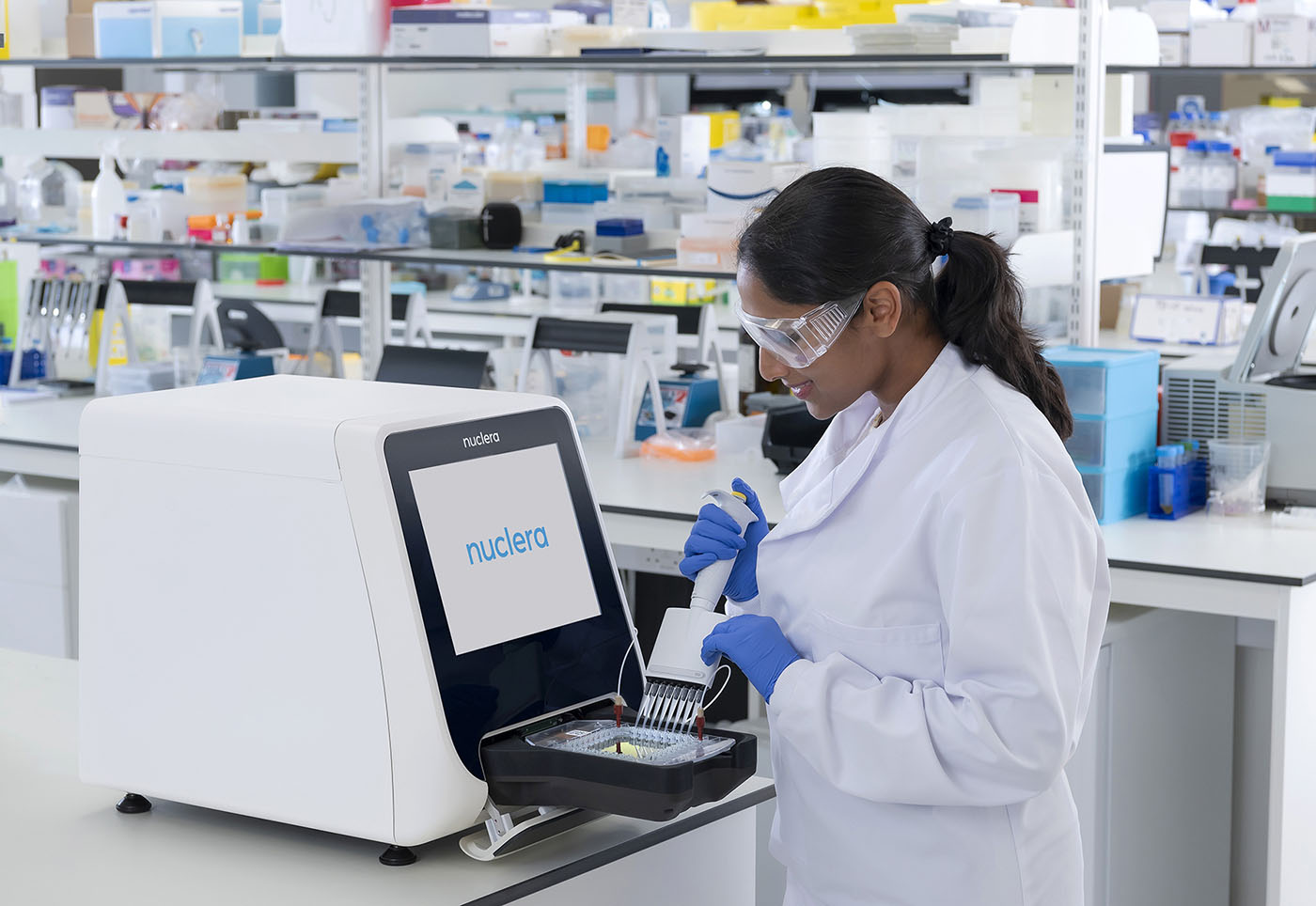
Join scientists from Cube Biotech and Nuclera for an on-demand webinar to explore a rapid, scalable workflow for expressing and stabilizing complex membrane proteins. Learn how membrane mimetics combined with the eProtein Discovery™ system enables stable, functional, assay-ready membrane proteins in just 48 hours, helping scientists move from bottleneck to breakthrough.

Learn more here eprote.in/protein-bottleneck.